Transforming Alphabet Learning into a Mindful Art Experience
Introducing the alphabet to a young learner is one of the most exciting, yet potentially overwhelming, milestones in early childhood education. For generations, the standard approach has been highly repetitive: show a flashcard, say the letter, trace the letter, repeat. While rote memorization has its place, it often strips the joy out of learning. Children are naturally creative, highly visual, and deeply tactile. They want to explore their world through color, shape, and artistic expression. That is exactly why we have completely reimagined early literacy practice with this comprehensive printable workbook.
We are thrilled to offer the ultimate free bundle of big alphabet coloring worksheets, designed specifically to merge foundational letter recognition with the proven therapeutic benefits of art. This isn’t your average, run-of-the-mill alphabet printout. Instead of presenting children with empty, hollow letters to quickly scribble inside, this entire PDF is a meticulously crafted artistic journey. By slowing down the learning process and integrating it with beautiful, engaging imagery, we help children build a deep, lasting cognitive connection with the English alphabet. They are no longer just memorizing a shape; they are experiencing it.
What Makes This Big Alphabets PDF So Unique?
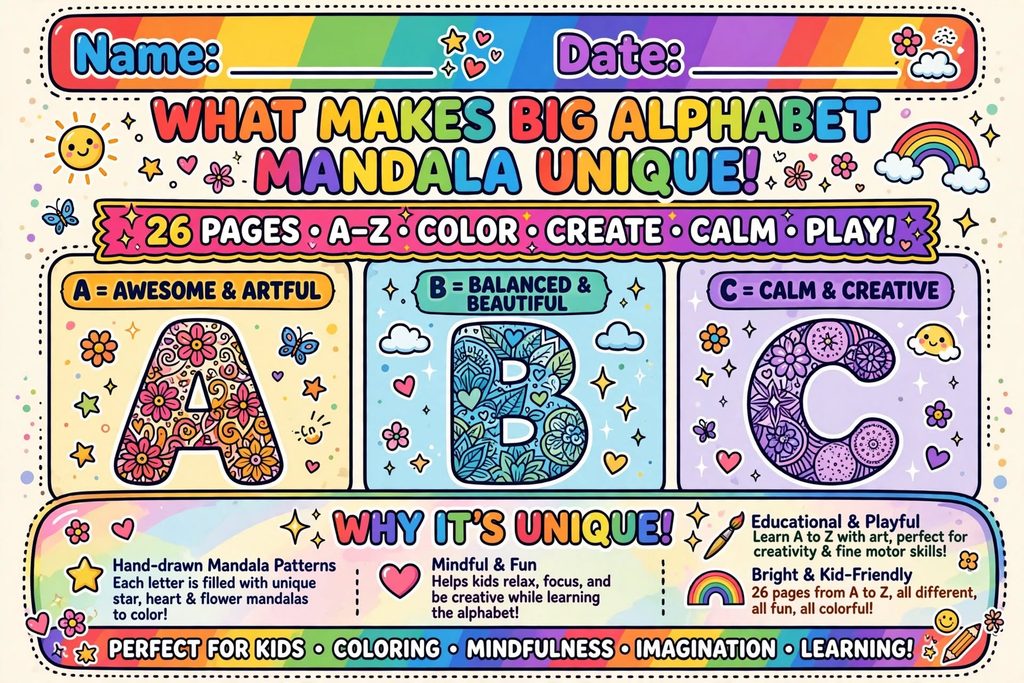
If you take a close look at the provided worksheets, you will immediately notice a stark difference in quality and design compared to standard preschool printables. This comprehensive workbook includes 26 dedicated pages, covering every single letter from A to Z[cite: 4]. However, the magic lies in the details. Each individual page features one massive, full-page letter that dominates the center of the sheet[cite: 4].
But these letters are not blank inside. Every single alphabet character is intricately filled with stunning, mandala-style geometric and floral patterns[cite: 4]. From the sweeping curves of the letter ‘S’ to the rigid, bold angles of the letter ‘K’ and ‘Z’, the interior of every character contains highly detailed line work waiting to be brought to life with color[cite: 4]. Additionally, we have included a clean, structured header at the top of every single page with dedicated spaces for the child’s “Name” and “Date”[cite: 4]. This transforms the activity from a casual coloring session into a structured, datable piece of academic work that parents and teachers can proudly archive to track a child’s developmental progress over the course of the school year. The bottom of each page is also professionally branded with the DOWNLOADWORKSHEETS.COM marker, ensuring you always know where to find more high-quality resources[cite: 4].
The Neuroscience of Coloring and Orthographic Mapping
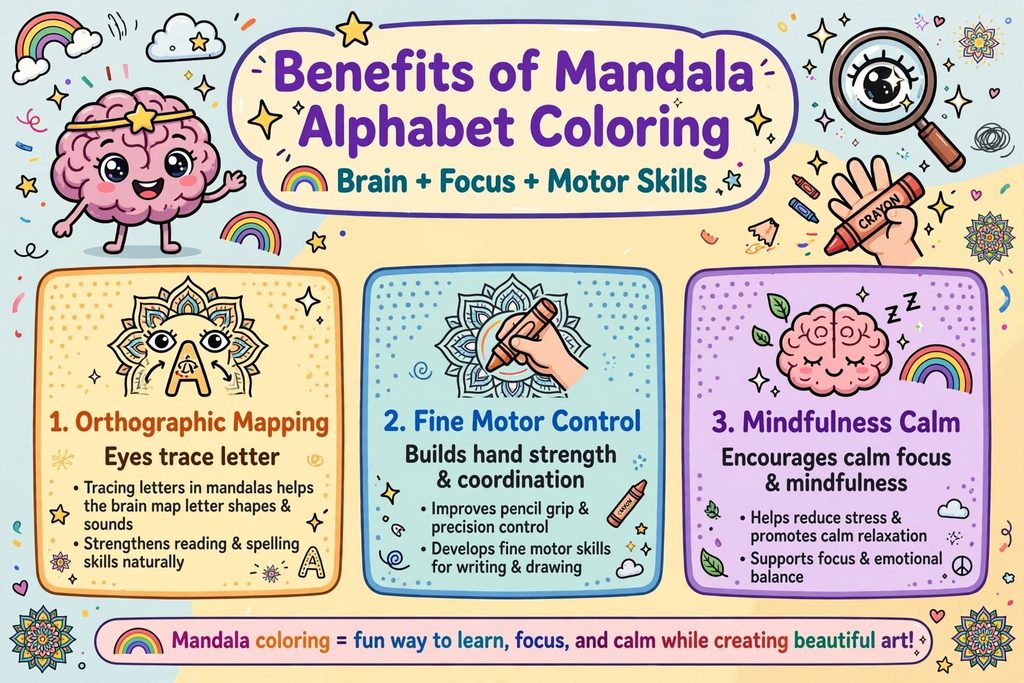
Why did we fill these letters with intricate mandala patterns instead of leaving them blank? The answer lies in the fascinating neuroscience of how children learn to read. For a child to recognize a letter effortlessly, their brain must undergo a process called “orthographic mapping.” This is the cognitive mechanism that turns a visual symbol (like the letter ‘A’) into an instantly recognizable, permanent mental image.
Orthographic mapping requires sustained visual attention. When a child colors a hollow, blank letter, they can scribble outside the lines and finish the page in thirty seconds. Their eyes barely rest on the actual shape of the letter. However, when a child is tasked with coloring the intricate, beautifully designed mandala patterns inside our big alphabet letters, they are forced to slow down[cite: 4]. They spend ten, fifteen, or even twenty minutes hyper-focused on the physical boundaries of the letter ‘B’ or ‘M'[cite: 4]. As they carefully switch colors between the floral petals and geometric shapes hidden within the letter, their eyes continuously trace the outer contour of the alphabet character. This sustained, joyful visual engagement heavily reinforces their memory of the letter’s structure.
This method perfectly complements traditional tracing. Once their brain has mapped the shape of the letter through our coloring pages, you can easily transition them to our alphabets coloring & tracing worksheets to practice the actual physical strokes required for handwriting.
Building Fine Motor Control Through Intricate Art
Beyond early literacy, this specific workbook serves as a powerhouse for physical development. Fine motor control—the coordination of the small muscles in the hands and fingers—is a critical prerequisite for writing, typing, tying shoelaces, and countless other life skills. Many educators struggle to find activities that genuinely challenge a child’s fine motor skills without causing immense frustration.
The intricate details within these alphabet pages provide the perfect physical workout for little hands. To stay within the lines of the internal mandala patterns, a child must practice dynamic pencil grip, pressure regulation, and minute hand-eye coordination[cite: 4]. They learn how to hold a colored pencil gently to shade a small circle, and press firmly to outline a bold geometric diamond. These are the exact same muscle movements required to hold a standard No. 2 pencil and write legible sentences in first grade.
If you notice that your child is struggling to stay within the complex lines of these specific letters, it is absolutely fine to take a step back and build their confidence with broader strokes. You can temporarily pivot to our broader color worksheet modules or our highly popular coloring pages for preschool and kindergarten to let them practice large-scale coloring before returning to the intricate A-Z bundle.
The Therapeutic Power of Mandala Coloring for Kids
We often talk about the academic benefits of worksheets, but we rarely discuss the emotional and psychological benefits. Classrooms and homes can be high-stimulation environments. Between screen time, noisy toys, and highly structured schedules, young children frequently experience sensory overload and anxiety. They need healthy, quiet outlets to self-regulate their nervous systems.
Mandala coloring is globally recognized by art therapists as a profound tool for inducing mindfulness and relaxation. The repetitive nature of the patterns within these letters helps lower heart rates and shift the brain into a calm, meditative state. When a kindergarten student sits down with the letter ‘R’ or ‘Y’ from this bundle, they are engaging in a quiet, centering activity[cite: 4]. This makes these worksheets an absolute must-have for the “cool down” corner in your classroom, or as a peaceful after-school transition activity at the kitchen table before starting more intensive homework, such as our basic maths for kids printables.
Creative Ways to Use This Alphabet Bundle in the Classroom
The versatility of a 26-page, full-alphabet bundle is practically endless. While handing out a single sheet for morning work is highly effective, here are several creative, out-of-the-box ways educators and homeschooling parents can utilize this specific PDF to maximize engagement:
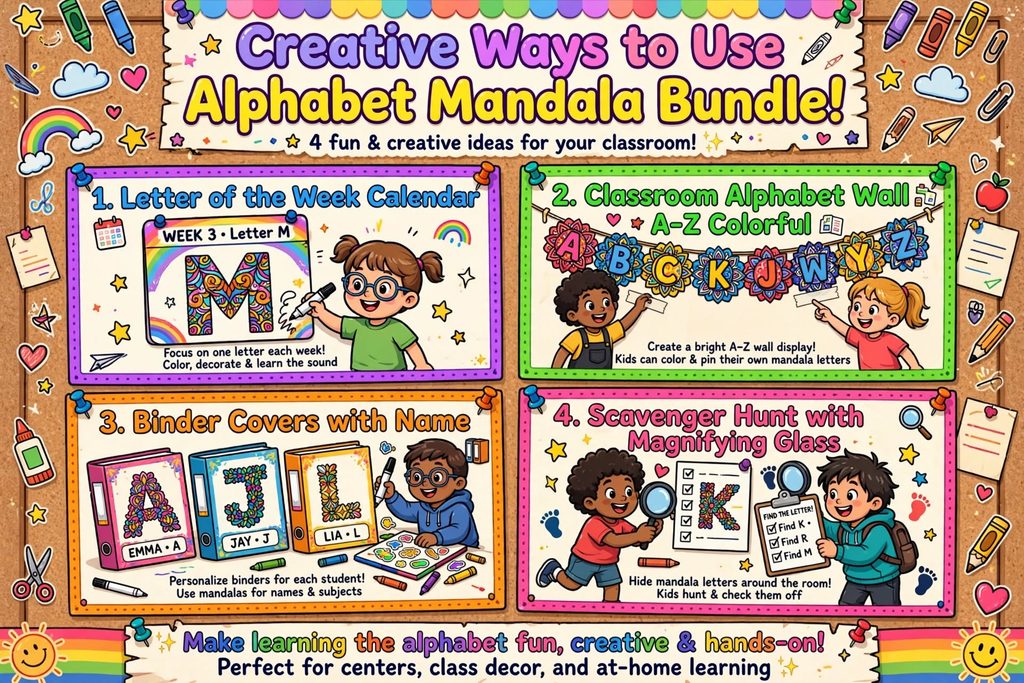
- The “Letter of the Week” Curriculum: This is a staple in early childhood education. Dedicate an entire week to deeply exploring a single letter. On Monday, print out the corresponding letter from this bundle and have the child spend the week slowly coloring it. Pair this activity with reading books that heavily feature that letter, and complement it with our A-Z alphabet worksheets bundle for comprehensive phonetic practice.
- A Collaborative Classroom Alphabet Wall: Print out the entire A to Z bundle[cite: 4]. Assign one letter to each student in your class. Allow them to use their favorite mediums—crayons, watercolors, or glitter pens—to decorate their specific letter. Once finished, laminate the pages and hang them in alphabetical order across the top of your classroom wall. The students will feel an immense sense of pride seeing their personalized artwork acting as the official classroom alphabet reference!
- Personalized Binder Covers: Because these pages feature a dedicated “Name” block at the top[cite: 4], they make fantastic covers for student portfolios. Have a child color the letter that corresponds to the first letter of their first name (e.g., Sarah colors the “S”). Slide it into the clear front pocket of their three-ring binder to personalize their daily work folder.
- Themed Alphabet Matching: Bring the alphabet into the real world. After a child finishes coloring the letter “C,” have them go on a scavenger hunt around the house or classroom to find three items that start with that letter. You can also pair this with our comprehensive matching worksheets for kids to bridge the gap between letter shapes and physical vocabulary words.
Addressing Diverse Learning Styles and Needs
Just like our analytical kindergarten comparisons worksheets, this alphabet bundle is designed to be highly inclusive. We understand that every child processes information differently, and these pages naturally cater to multiple learning profiles:
For the Visual Learner: The high-contrast, thick black borders of the main letters ensure that the actual character shape stands out prominently against the intricate internal patterns[cite: 4]. Visual learners will thrive on analyzing the symmetry and geometric flow inside each character. Encourage them to use specific color palettes—like all warm colors for vowels and cool colors for consonants—to add an extra layer of visual categorization to their learning.
For the Kinesthetic and Tactile Learner: These learners need to physically engage with their materials. Do not limit them to just standard colored pencils! Let them paint the letters with watercolors, use textured glitter glue inside the mandala sections, or paste small tissue paper squares inside the larger geometric gaps within the letters. The more textured the medium, the more deeply the kinesthetic learner will engage with the shape of the alphabet.
For Older Students and Adults: Interestingly, because these pages feature intricate mandala patterns rather than childish cartoons, they are highly appropriate for older students who may need remedial literacy help, or even for adults learning English as a Second Language (ESL). The sophisticated design preserves the dignity of the older learner while still providing the necessary foundational exposure to the English alphabet.
Why We Chose Mandala Over Standard Clipart
You may be wondering why we didn’t just put an apple inside the ‘A’ and a bear inside the ‘B’. While phonetic imagery is wonderful (and heavily featured in our other reading modules), we wanted this specific workbook to focus entirely on the architecture of the letters themselves. When an apple is drawn inside an ‘A’, the child often focuses on coloring the apple and completely ignores the letter. By filling the letters with abstract, symmetrical designs[cite: 4], the child’s brain is forced to focus on the overall silhouette and structural boundaries of the actual alphabet character. It is an immersive structural study disguised as an art project.
If you want to supplement this structural learning with vocabulary and phonetic sounds, you can easily pair these pages with our color cute animals sheets, asking the child to color an animal that matches the letter they just completed (e.g., coloring the dog after finishing the letter ‘D’).
Integrating Alphabet Art into Daily Learning Routines
Consistency is the golden rule of early childhood education. Learning a brand new symbol system—which is essentially what the English alphabet is—requires daily, low-pressure exposure rather than intense, sporadic cramming sessions. By integrating these big alphabet coloring pages into a predictable daily routine, you dramatically increase a child’s retention and enthusiasm for learning.
For parents at home, consider establishing a “Morning Art” ritual. While breakfast is being prepared or immediately after waking up, place one alphabet page on the table alongside a fresh cup of colored pencils. This quiet, self-directed activity gives the child a peaceful start to the day, engaging their brain without the immediate need for screens or hyper-stimulating toys. For classroom teachers, these pages are the ultimate “bell ringer” or “soft start” activity. As students slowly trickle into the classroom, they can immediately sit at their desks and resume coloring their letter of the week. It completely eliminates morning chaos, giving the teacher valuable time to take attendance and organize the day’s lesson plan while the children are happily engaged in a quiet, productive literacy task.
Furthermore, this daily routine builds an incredible sense of academic stamina. At the beginning of the school year, a five-year-old might only have the attention span to color a single petal inside the letter ‘A’ before needing to run off and play. But if you present the same activity daily, you will visibly notice their focus expanding. By the time they reach the letter ‘M’ or ‘N’ halfway through the year, they may sit quietly for twenty minutes, meticulously shading the intricate geometry. This acquired focus is precisely the kind of academic stamina they will need to succeed in more rigorous subjects, like reading comprehension and timed math testing, in the years to come.
Creating a Literacy-Rich Environment
Coloring the alphabet is just the first step; displaying the completed work is where the magic truly happens. A literacy-rich environment is one where letters, words, and text are naturally woven into the physical space the child inhabits. When a child sees their own artwork transformed into an educational tool, they begin to view themselves not just as students, but as actual authors and creators of knowledge.
We highly recommend creating a dedicated “Alphabet Gallery” in your home or classroom. As each letter from this bundle is completed, do not just file it away in a dark folder. Pin it proudly to a corkboard, tape it to the refrigerator, or string a clothesline across the playroom and hang the letters with colorful wooden pegs. When the child asks how to spell a word—for example, “Dog”—you can point directly to the ‘D’ they colored the week prior. You can say, “Dog starts with the letter ‘D’, just like the beautiful green and blue ‘D’ you painted!” Suddenly, the abstract concept of spelling is tethered to a personal, proud memory. This emotional connection to the alphabet is the absolute strongest foundation you can build for a lifelong love of reading.
Frequently Asked Questions (FAQs)
What age group is this alphabet coloring bundle best suited for?
While targeted primarily at preschoolers and kindergarteners (ages 4 to 6) who are actively learning their letters, the intricate nature of the mandala patterns makes these pages highly engaging for older elementary students, and even adults, seeking a relaxing, mindfulness-based coloring activity.
Can I use these pages for a preschool classroom curriculum?
Absolutely. Every single one of our printables is completely free for personal, classroom, and homeschool use. You can print the entire 26-page A-Z bundle[cite: 4] for your whole class without worrying about licensing fees or hidden costs.
What are the best coloring tools to use for these specific worksheets?
Because the internal patterns are highly detailed[cite: 4], we recommend using fine-tip colored pencils, gel pens, or thin markers. Broad, chunky crayons may be too large to stay within the intricate lines, though they are still perfectly fine for younger toddlers who are just focusing on the general shape of the letter rather than the tiny details.
How can I help my child if they get frustrated by the small details?
Remind them that there is no “right” way to color art! If they don’t want to color every single tiny triangle or petal within the letter, they can color over large sections of the pattern with a single color. The primary goal is sustained engagement with the letter’s shape, not absolute perfection.
Explore More Educational Printables and Worksheets
Your child’s learning journey does not stop at the alphabet! We offer a massive, ever-growing library of high-quality, completely free educational resources to support every facet of early childhood development. Once your child has mastered their letters, challenge their visual perception with our mind-bending shadow matching worksheets. Or, if they are ready to dive into the world of numbers and logical reasoning, print out our comprehensive basic maths for kids workbook to keep their cognitive momentum going strong.
Ready to Start Coloring? Download Your Free PDF Below!
It is time to pull out the massive box of colored pencils, clear off the kitchen table, and dive into a world where art meets literacy. Click the secure, high-speed download button below to instantly save and print your complete 26-page Big Alphabets Mandala Coloring bundle.
↓↓↓Download Here ↓↓↓
